Kilimanjaro
Planning a Kilimanjaro Climb?
Tell us your fitness level and timeframe and we’ll recommend the right route.
Plan My SafariOr email us- Free, tailor-made itinerary and quote
- Licensed operator, TALA 035907
- We reply personally, usually within a few hours
Overview
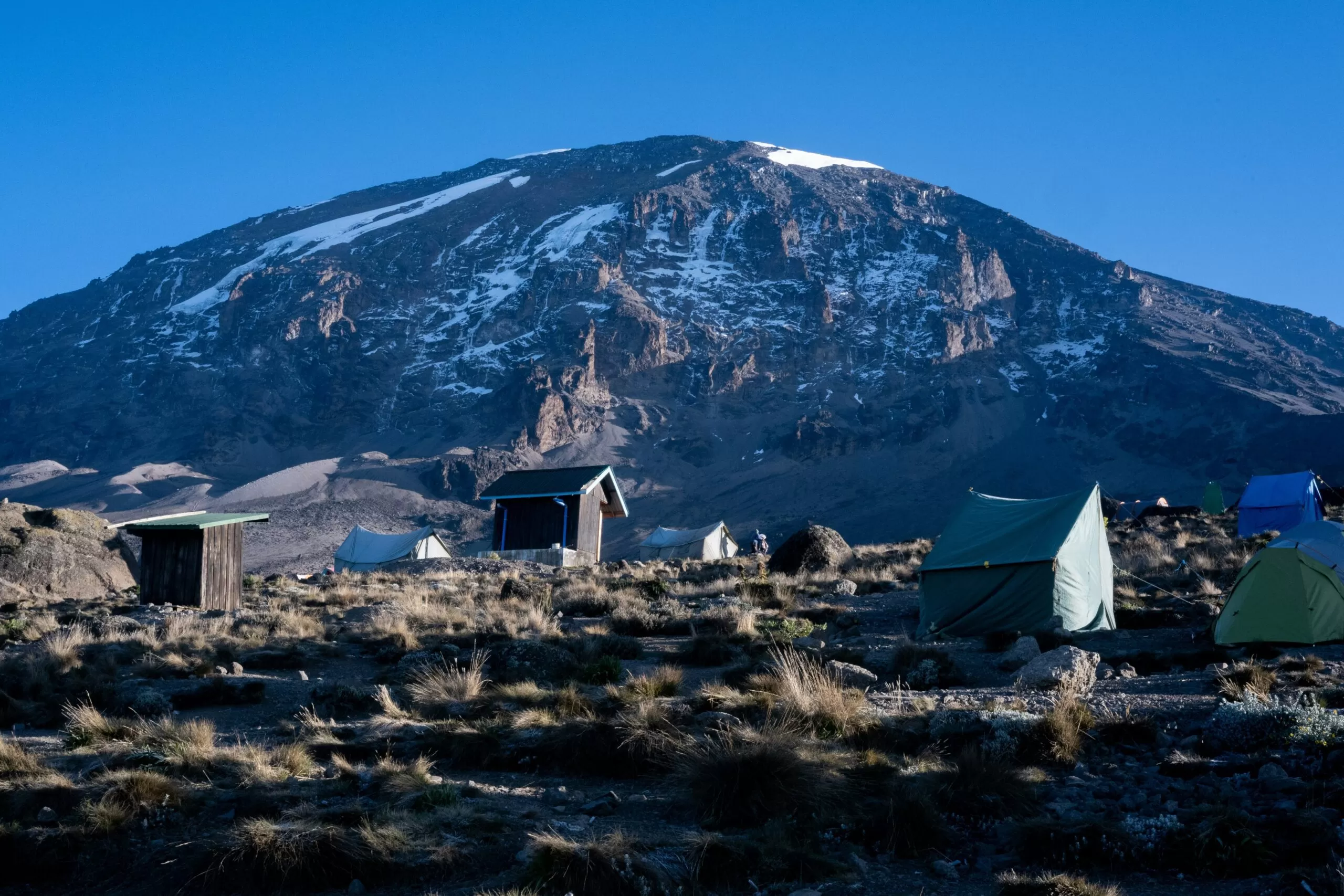
Kilimanjaro rises to 5,895 metres at Uhuru Peak, its summit point, and is one of the Seven Summits — the highest peak on each continent. The mountain’s dormant volcanic cone passes through five distinct climate zones on the way up, from cultivated farmland at the base through rainforest, moorland, and alpine desert, to arctic conditions near the summit.
Routes & Highlights
Several routes lead to the summit, each with a different character. Machame, often called the “Whiskey Route,” is scenic and popular, typically taking six to seven days. Marangu is the only route with hut accommodation rather than tents, and can be climbed in five days, though its shorter duration lowers success rates. Lemosho offers some of the most dramatic scenery and better acclimatisation over eight days, while Rongai approaches from the quieter northern side.
Choosing a longer route with an extra acclimatisation day meaningfully improves your summit success rate — altitude, not fitness, is usually what turns climbers back.
The mountain doesn’t reward speed. Climbers who go slowly and sleep low relative to their daytime altitude summit far more often than those who rush.
Things to Do
Kilimanjaro is the tallest free-standing mountain in the world, rising straight from the plains rather than being part of a mountain range.
Best Time to Climb
| Season | Conditions | Best For |
|---|---|---|
| Jan – Mar | Dry, colder at altitude, less crowded | Clear views, quieter trails |
| Jun – Oct | Dry, most popular climbing window | Reliable weather, sociable atmosphere on trail |
| Apr – May & Nov | Rainy seasons | Generally avoided for climbing |
Getting There
Most climbers fly into Kilimanjaro International Airport (JRO), located close to the mountain, and transfer directly to their chosen route’s starting gate — typically a drive of one to two hours from Arusha or Moshi.
Is Kilimanjaro Right for You?
- You want a genuine physical challenge that doesn’t require technical climbing experience
- You’re willing to spend an extra day or two on route for better acclimatisation
- You want to combine a summit attempt with a Tanzania safari or Zanzibar stay
- You’re comfortable with multi-day camping in changing weather and temperature
Frequently Asked Questions
Do I need climbing experience?
No technical skills are required — it’s a long, high-altitude trek, not a technical climb.
Which route has the best success rate?
Longer routes with built-in acclimatisation days, such as Lemosho, generally show higher summit success than shorter routes like Marangu.
Can I combine Kilimanjaro with a safari?
Yes — many of our guests summit first, then head straight into the Serengeti or Zanzibar to recover.
Related Day Trips

Plan Your Trip to Kilimanjaro
Tell us your travel dates and interests and we’ll build a free, tailor-made itinerary for you.