Best Time to Visit Tanzania for a Safari: A Complete Month-by-Month Guide
Few questions come up more often than “when should I go?” Tanzania has more than one good answer. The dry season gives the easiest game viewing, the green season gives quiet roads and lower rates, and the Great Migration means the best spot in the Serengeti changes with every month. This guide explains each season, walks through the year month by month and shows which parks shine when, so you can match your dates to the safari you want.
On This Page
- The Short Answer
- Tanzania’s Safari Seasons Explained
- Month-by-Month Tanzania Safari Guide
- The Great Migration: Where the Herds Are by Season
- Best Time to Visit Each Park
- Dry Season vs Green Season: Which Should You Choose?
- Sample Itineraries by Season
- Planning Tips: Booking Early and Packing for the Season
- Frequently Asked Questions
The Short Answer
The best time to visit Tanzania for a classic wildlife safari is the dry season from late June to October, when animals gather around shrinking water sources and the grass is short. But “best” depends on what you want to see. January and February suit calving season in the southern Serengeti, July to September suits Mara River crossings, and the green season from November to May brings fewer visitors, lower rates and superb birdwatching. Tanzania can be rewarding in every month, and the rest of this guide explains why.
Dry season (June to October) is best for general game viewing. January to February is best for calving. July to September is best for river crossings. March to May is the quietest and usually cheapest time, with the heaviest rain in April and May.
Tanzania’s Safari Seasons Explained
Tanzania sits just south of the equator, so it has two rainy seasons and two drier periods rather than four temperate seasons. Rainfall varies by region and by year, so use the dates below as a guide, not a promise.
The long dry season: June to October
This is peak safari season. Rain is rare, days are warm and sunny, and nights can be cold, especially at altitude around Ngorongoro and in the Serengeti. Vegetation thins and animals concentrate around rivers and waterholes, so wildlife viewing is easier. It is also the busiest and most expensive time, so book early.
The short dry spell: January to February
After the short rains, January and February are often hot and relatively dry. The southern Serengeti and Ndutu area fills with wildebeest, zebra and newborn calves, and predators follow. Many travellers consider this the best-kept secret of the safari calendar.
The long rains: March to May
Rain is most frequent from March to May, and heaviest in April and May. Showers often fall in the afternoon, the landscape turns vivid green, and some remote camps close or have limited access. In return you get empty roads, low rates and dramatic skies. This is the green season.
The short rains: November to December
The short rains usually begin in November and are lighter and less predictable than the long rains. Many days are still sunny, migratory birds arrive, and prices are often below the peak. Late December brings a holiday price surge.
| Period | Typical weather | Wildlife viewing | Crowds and prices |
|---|---|---|---|
| Jan – Feb | Hot, mostly dry | Calving in the south, strong predator action | Moderate to high |
| Mar – May | Long rains, green | Good, with fewer vehicles | Low |
| Jun – Oct | Dry, cool nights | Easiest game viewing, river crossings | Highest |
| Nov – Dec | Short rains, warm | Good, migratory birds | Low to moderate, rising at Christmas |
Month-by-Month Tanzania Safari Guide
January
Hot and mostly dry. The Great Migration herds are usually on the southern plains around Ndutu, and calving begins to build. Tarangire is green and quieter. Kilimanjaro is a good trekking month, with clearer weather than the long rains.
February
Usually the peak of calving in the southern Serengeti, which also means peak predator action as lion, hyena and cheetah hunt the newborns. Book early, because this is a favourite with photographers.
March
The long rains start to arrive. The herds begin to spread out, while the green landscape and fewer visitors make it an appealing month for budget-conscious travellers who do not mind some showers.
April
Typically among the wettest months. Some camps close, but those that stay open offer great value. The herds are usually moving north through the central Serengeti.
May
Still rainy, with the rains easing late in the month. The scenery is lush, birdlife is rich and the herds are generally in the central and western Serengeti.
June
The rains end and the dry season begins. The herds often reach the Western Corridor and the Grumeti River, while the central Serengeti around Seronera remains productive. This is a strong month to combine good wildlife with fewer crowds than July to September. If you are searching for a Tanzania safari in June, it is one of the most balanced choices of the year.
July
Dry, clear and busy. Herds typically move toward the northern Serengeti, and Mara River crossings can begin. Tarangire and Ngorongoro are also at their best.
August
Peak river-crossing territory in the north, and one of the highest-demand months for every park. Expect cool mornings and plenty of dust.
September
Still excellent for crossings and general game viewing, with slightly fewer visitors than August. Many experienced safari guests prefer September for this reason.
October
The herds start to drift south again, the dry season winds down, and the first storms may appear late in the month. Elephant concentrations in Tarangire remain strong.
November
Short rains begin, prices ease and the herds head back toward the south. A good month for value and for birdwatching.
December
Green landscapes, newborn animals starting to appear and warm weather. If you want a Tanzania safari in December, expect festive-season demand and higher rates around Christmas and New Year, so book months ahead. The southern Serengeti and Ndutu are typically the focus.
The Great Migration: Where the Herds Are by Season
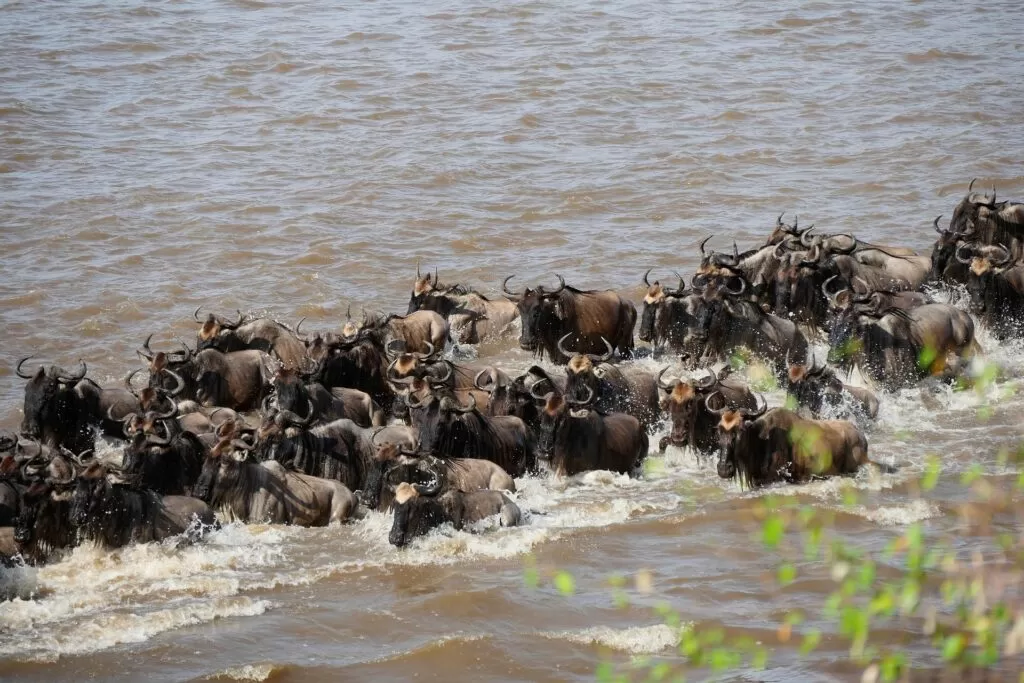
The Great Migration is not a single event. More than a million wildebeest, together with zebra and gazelle, follow the rains in a broad loop through the Serengeti-Mara ecosystem.
- December to March: southern Serengeti and Ndutu, calving season
- April to June: moving north through the central and western Serengeti, with possible Grumeti River crossings
- July to October: northern Serengeti and the Mara River
- November: turning south again as the short rains begin
Because timing follows rainfall, no one can promise a river crossing on a given day. Our dedicated guide, Where Are the Wildebeest Right Now?, explains the pattern in more detail, and our 7-day northern Serengeti Great Migration safari is built around the river-crossing season.
Best Time to Visit Each Park
| Destination | Best months | Why |
|---|---|---|
| Serengeti | Year-round; June to October for crossings, January to February for calving | Different regions of the park shine in different seasons |
| Ngorongoro Crater | Year-round; June to October is driest | Resident wildlife stays in the crater all year |
| Tarangire | June to October | Dry season draws elephants and other animals to the river |
| Lake Manyara | Year-round; birdwatching is best in the wetter months | Soda lake and woodland suit both seasons |
| Kilimanjaro | January to March and June to October | Drier, clearer trekking conditions |
| Zanzibar | June to October and December to February | Drier, sunnier beach weather |
| Mkomazi | Dry season is easiest for access and viewing | Quieter park with fewer visitors |
Official park rules and updates are published by Tanzania National Parks and the Ngorongoro Conservation Area Authority.
Dry Season vs Green Season: Which Should You Choose?
Choose the dry season if
- You want the easiest wildlife viewing and the most predictable weather
- You want Mara River crossings or elephants gathered in Tarangire
- You are travelling in school holidays and can book early
Choose the green season if
- You want lower prices and quieter roads
- You love birdwatching, dramatic skies and green scenery
- You are happy to accept some rain and a slightly harder spotting challenge
Neither is better in absolute terms. Many guests are surprised by how much they enjoy the green season once they experience a Serengeti without a crowd of vehicles.
Sample Itineraries by Season
- Dry season, short on time: the 4-day Tanzania safari adventure or 4 days in northern Tanzania cover the Serengeti and Ngorongoro
- Migration and river crossings: the 7-day northern Serengeti Great Migration safari
- Safari plus beach: the 12-day Tanzania, Kenya and Zanzibar safari and beach holiday
- Climb and safari: pair a Kilimanjaro trek such as the 6-day Marangu route with a short wildlife safari
- Short on days: browse our Tanzania day trips to Tarangire, Ngorongoro and Lake Manyara
Planning Tips: Booking Early and Packing for the Season
Book the dry season months, and Christmas and New Year, as early as you can, because camps in the best locations fill quickly. Pack layers: mornings and evenings on game drives can be cold even in the dry season, especially at altitude. Our Tanzania safari packing list covers what to bring in each season, and our safari cost guide explains how timing affects prices.
Plan Your Tanzania Safari Around the Right Month
Tell us your travel dates and interests, and we will suggest the best parks, camps and route for your month, with a free, no-obligation quote.
Frequently Asked Questions
What is the best month to visit Tanzania for a safari?
For general wildlife viewing, September is a favourite because it is dry, the northern Serengeti is rewarding and crowds are slightly lower than August. The best month depends on your priorities, whether river crossings, calving or lower prices.
Is June a good time for a Tanzania safari?
Yes. The rains have ended, the landscape is still fairly green, and the herds are often moving through the central and western Serengeti. It is generally less crowded than July to September.
Is December a good time for a Tanzania safari?
Yes. The short rains are usually light, the southern Serengeti begins to fill with herds, and the landscape is green. Christmas and New Year are busy and more expensive, so book early.
When is the rainy season in Tanzania?
The long rains fall from about March to May, and the short rains from about November to December. Patterns vary from year to year.
Can you do a safari in the rainy season?
Yes. Most parks stay open, rates are lower and the scenery is beautiful, but some camps close and some roads can be difficult. Ask us which camps stay open in your travel month.
When is the Great Migration in Tanzania?
The herds are in Tanzania all year and move with the rains. Calving is usually around January to March in the south, and river crossings are most likely from about July to September in the north.
What is the cheapest time to go on safari in Tanzania?
Usually the long rains, roughly April to May, followed by the early part of the short rains in November. Prices vary by lodge and are always subject to change.
What is the best time to climb Kilimanjaro and also go on safari?
January to March and June to October offer the clearest trekking weather, and both periods also work for wildlife safaris.